
Horizon Route - "Open Spaces and Little Places"

Download GPS Coordinates (KML file) (what is this?)

“The province of the Free State has always had a magical effect on me ... With its flat, dusty landscape as far as the eye can see, the great blue ceiling above, the endless stretches of yellow mealie fields, scrub and bushes, the Free State landscape gladdens my heart no matter what my mood. While I am there I feel that nothing can shut me in, that my thoughts can roam as far and wide as the horizons.”

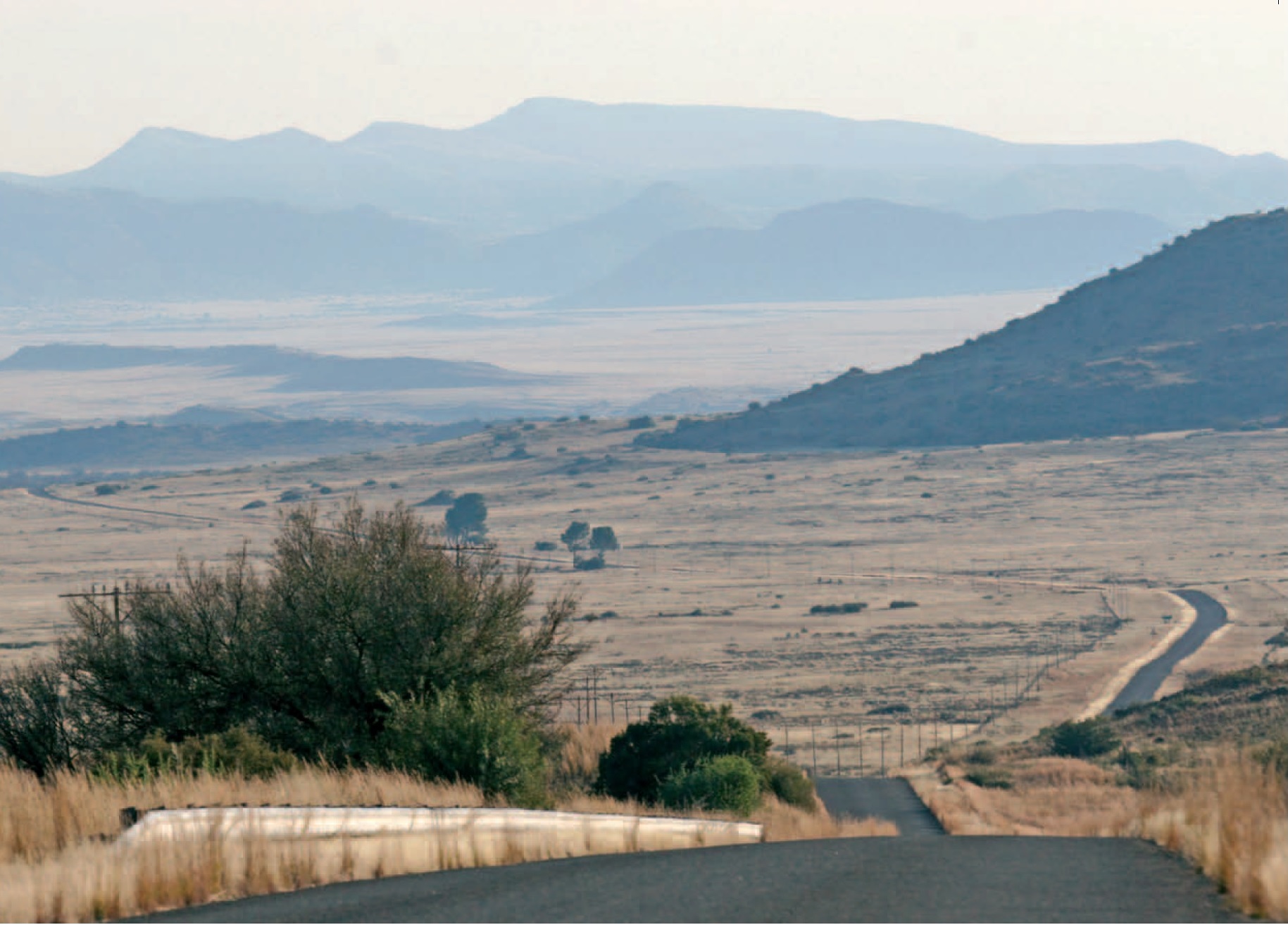
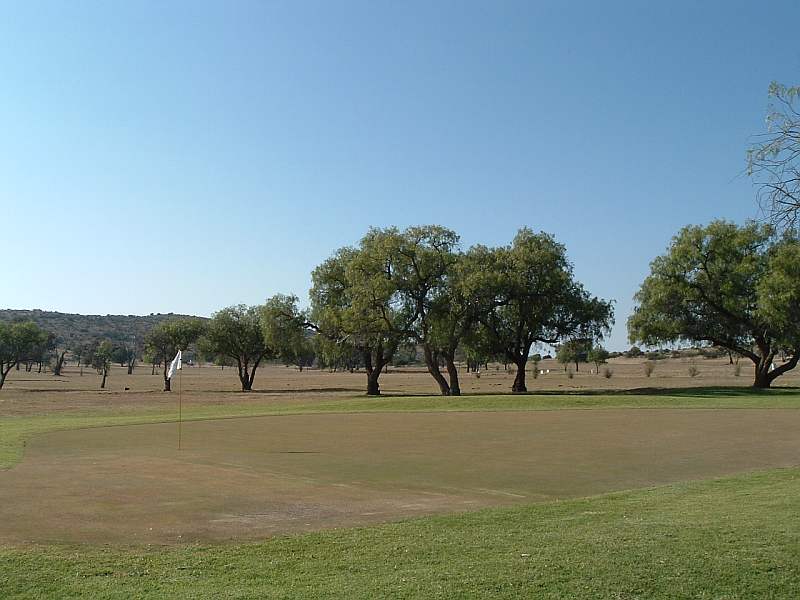
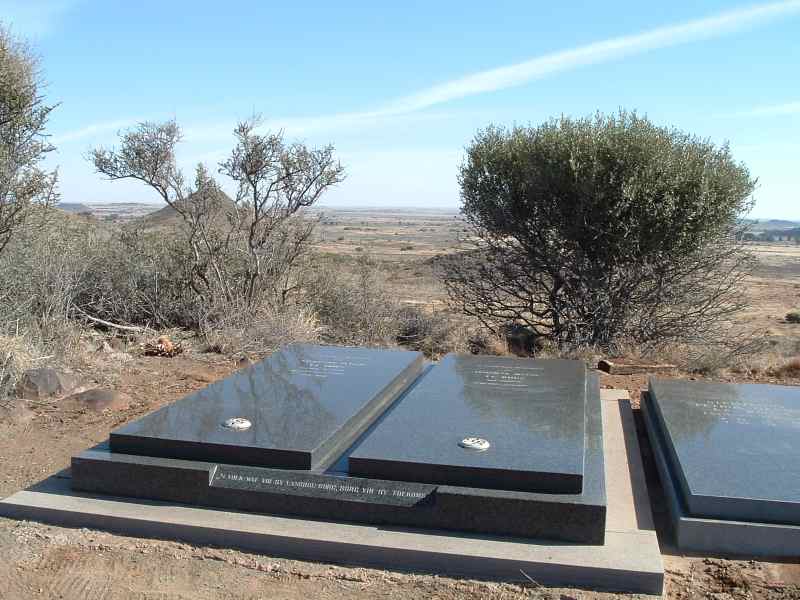
This paragraph is an extract from Long Walk to Freedom, Nelson Mandela’s autobiography. It is true that the Free State can gladden the heart and give the mind freedom to roam, for here there is space … almost endless open space. Golden fields of grasses and grains are dotted with cattle and sheep. Koppies interrupt the horizon at intervals. Tributaries of the Orange or Gariep River snake their way through the dry land. Here there is space, and plenty of it. The space is roofed by blue skies, which are only rarely blackened by rain clouds. Here, one feels freedom – freedom to breathe, freedom to be.

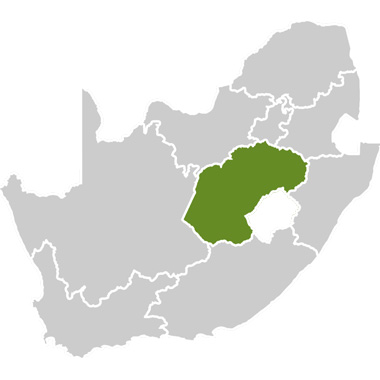
In the south-western Free State, where the Horizon Route is located, the open space is complemented by many a little place – small towns or villages that pride themselves on surviving in the vastness. Villages that grew for a certain reason; because there were minerals found, or because there was a need for a church and centre for the surrounding farmers. These villages have survived urbanisation, and in some cases have even grown. Each village on the route has its own unique theme and characteristics.

The Horizon Route enables travellers to explore these little places, to learn about their history and meet the local people. Instead of rushing to a destination, this route is an ideal way for a traveller to leave the beaten track. There are fast thoroughfares through the Free State on the N1 and N12 highways, but this route invites drivers to slow down, relax and see some interesting sights.

Experience the clear skies, fresh air, open roads and space here on the Horizon Route. See diamond mining, agriculture and crafters; taste Free State cuisine and enjoy legendary hospitality; walk on the open plains; hunt, fish, ride mountain bikes, the opportunities for visitors are as endless as the space.

Glossary of terms:

Biltong: Spicy air-dried meat (beef, game or ostrich), preserved with salt and seasoned with pepper, coriander and other spices.

Braai: The South African barbecue. An abbreviation of the Afrikaans word braaivleis (meaning “grilled meat”). Meat products and other accompaniments such as vegetables and garlic bread are cooked over an open fire in a relaxed, sociable environment.

Koeksisters (also spelt koeksusters or koesisters): Twisted plaits of dough, deep-fried in hot oil and soaked in thick syrup until translucent. Koeksisters are originally from the Orient.

Koppies: Rocky hillocks.

Lapa: An outdoor braai or meeting area, often with a thatched roof, often alongside a swimming pool.

Marogo: A cooked spinach dish.

Pap: Corn-meal porridge, usually thick enough to eat with your fingers.

Platteland: Directly translated into “flat lands”, this term actually means countryside.

Roosterkoek: Bread baked over open coals.

Vetkoek: Deep-fried dough that can have a savoury or sweet filling.

Witblits: A potent alcoholic beverage distilled from grapes.

Philippolis/Poding Tse Rolo/Bergmanshoogte:

Back in 1972, the residents of Philippolis had a sad time. Until then, cars on the highway between Cape Town and Johannesburg had passed through their town. But overnight the taps were turned off as the N1 highway was re-routed via the Gariep Dam and Springfontein, only a short yet telling distance away. The economy of the town crumbled, and the five petrol stations of those days became the one of today.

In the long run, Philippolis has seen a positive side to this rerouting of the national road – serious crime is rare, property prices have remained relatively low and national monuments have remained protected and cared for. Philippolis, the oldest settlement in the Free State, has the most national monuments in the province after Bloemfontein and Bethlehem.

Like Richmond, Aberdeen and Hanover, Philippolis has a namesake overseas – in Syria, of all places! The southern Free State town was named after a missionary, Dr John Philip. The London Missionary Society sent him to South Africa with two purchased medical degrees (from Stanton and Princeton), thinking that these “qualifications” would lend him more stature.

A further history of Philippolis:

John Philip was the son of a weaver, James Phip (later changed to Philip) and born in 1777. He left school at the age of 11 to become a spinner and weaver, and was later trained to be a preacher. In 1791, after serving two parishes, he was dispatched by the London missionaries to South Africa to involve himself in politics and mission work.

Where Philippolis is today, Philip assisted in establishing a mission station for the Khoi and the Bushmen. The added advantage of such a place was that it could double as an observation post to keep an eye on the Boers who were migrating over the Orange River illegally.

However, nothing came of either of these functions. The Bushmen, Khoi and (then) Griquas were nomadic in order to sustain their hunting needs. Due to the sheer number of Boers trekking over the river, the Orange Free State Republic government bought the area surrounding Philippolis from the Griquas. Any plans the English had of staunching the flow of Boers were never realised.

It is here in Philippolis that the Griqua leader, Adam Kok, established his command post, writer Laurens van der Post was born and Emily Hobhouse established a school of weaving. The impressive Dutch Reformed Church was the venue of the first wedding held in Afrikaans, performed by Rev Tobie Muller.

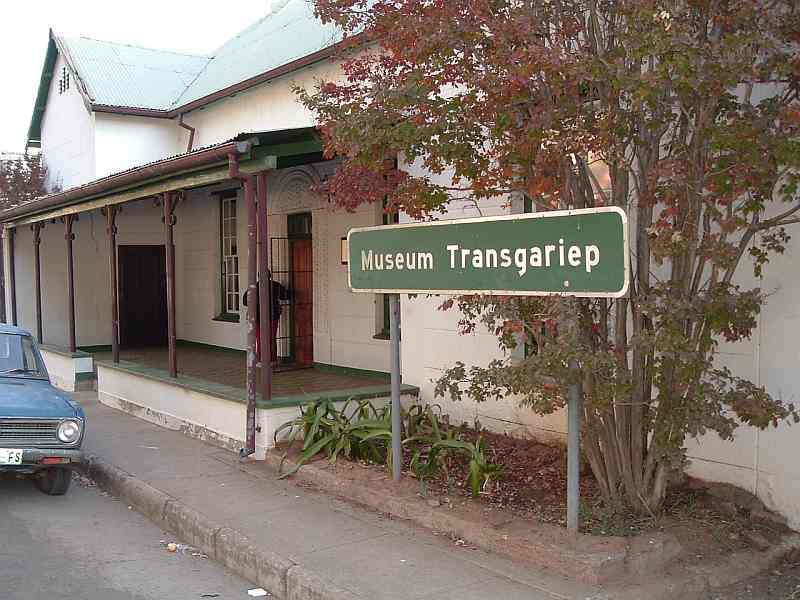
One is acutely aware of this rich heritage in upper Voortrekker Street. Along this pine-lined street, there are inscriptions indicating the Victorian Jacobson library building, the Trans-Gariep museum, and Adam Kok’s command post and cannons. Poding Tse Rolo, the local township, is also worth a visit as it too has an interesting history.

There’s plenty to do in the surrounds. The Gariep and Waterkloof dams are the two biggest in South Africa, and the Orange River, which flows between these two, offers outstanding fishing opportunities. There are over 200 bird species, including hundreds of the rare blue crane, to see. The photogenic Waterkloof settlement (on the road to Colesberg) could possibly have been a second Nieu-Bethesda, had it been saved 20 years earlier. It is now the local ghost town.

Visitors should surely pop into Ons Dien, the general dealer, where one can acquire some locally cultivated olives, as well as the local newspaper Philippolis Pos(t). The Pos is crammed full of local news and is a must for anyone who wishes to know what is getting the town buzzing. The local butchery offers top-grade Karoo lamb, and will gladly pre-pack and freeze orders.

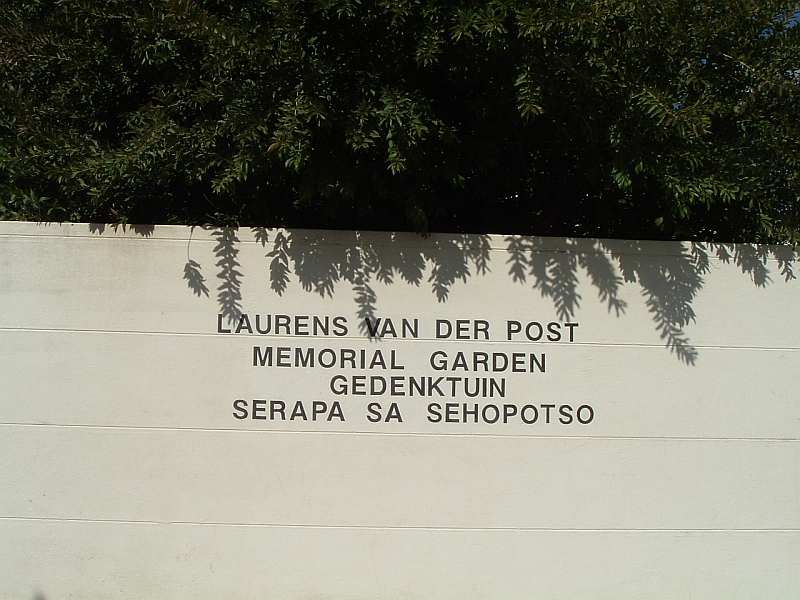
Game farms, 4x4 routes, the Laurens van der Post Memorial Centre, tiger breeding projects, and the many lovely guesthouses in the town make Philippolis an ideal stop-over or indeed a destination.

Perhaps buying property in Philippolis is a good idea. A mining company has been prospecting since October 2003 and has already taken options on future developments. There is undoubtedly gold in the area – it just remains to be seen whether there are sufficient layers and deposits to sustain a mining operation.

More Philippolis info:

How to get there:

Especially during the holiday season, the R717 road is an ideal alternative route to the N1 highway. This tarred road is both quiet and 7km shorter than the N1. Turn off at Colesberg or Trompsburg and avoid heavy traffic for about 120km.

Worth knowing:

  • Most businesses do not have credit card facilities;
  • A bank for cash is open daily with the same hours as the petrol station.

Festivals:

Philippolis is the home of the saddle horse. The second-largest saddle horse show in the country is held here annually in November.

April sees the famed Witblitsfees where witblits is celebrated and flea markets are held. The Transgariep museum is one of the few in the country that is licensed to serve alcohol. This brand of witblits differs from regular mampoer in that it is distilled from grapes, whereas mampoer is usually distilled from other fruits like peaches.

History of Jagersfontein:

Jagersfontein is situated 110km south west of Bloemfontein in the heart of the Transgariep Tourist Region. Diamonds were discovered here in 1869 and the mine was finally closed down in 1974.  The town has a great mining history which is not well known in South Africa.  

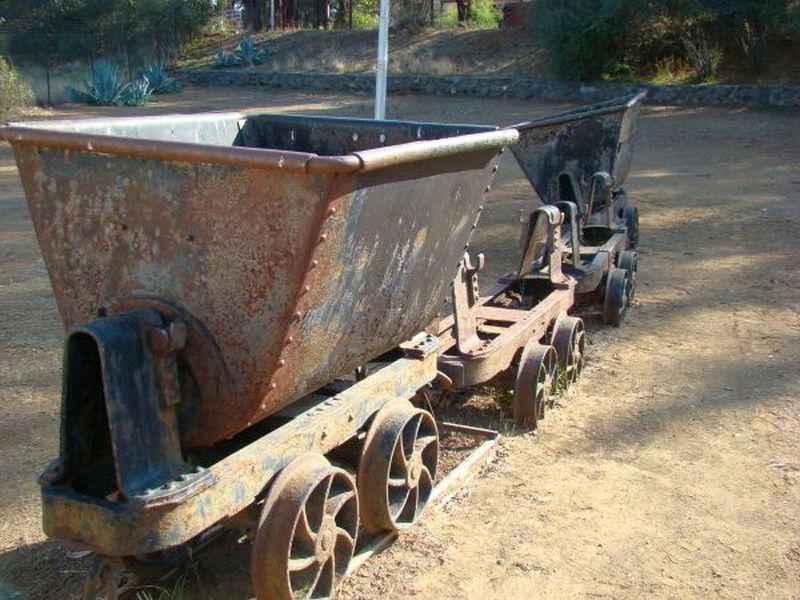
The big hand-dug mining hole of Jagersfontein has recently been found to be bigger and almost three years older than that of Kimberley.  The big hole measures 19.6ha on its surface compared to the 17ha of the Kimberley hole.  The part that was dug by hand is also deeper than that of the Big Hole of Kimberley. Jagersfontein can be considered to be the oldest diamond mine in the world as it is the first site where diamonds were discovered in its mother stone, later called Kimberlite.  

In its heydays Jagersfontein was quite a town.  It boasted with five big hotels, 17 boarding houses and 34 different bars. It also had its own stock exchange, race course, golf course, public swimming pool and even a theatre society. 

Jagersfontein is indeed the oldest mining town belonging to the great and famous South African diamond and gold mining industry.  Towns like Pelgrimsrust and Barberton are actually much younger.

In terms of diamonds, Jagersfontein is also very special.  It is the home of the blue white diamonds known as 'Jagger' diamonds.  Famous people like Al Capone and Elizabeth Taylor owned some of the diamonds discovered at Jagersfontein. The size of diamonds discovered in the Jagersfontein mine is remarkable.  Of the world’s 20 biggest diamonds ever discovered, seven came from this mine. The two biggest diamonds discovered in the mine were the Excelsior, measuring 995 carats that was found in 1893 and the Reitz, later called the Jubilee, measuring 630 carats that was found in 1896.  Both these stones were blue whites and  taken up as part of the British Crown Jewels.

Several famous people were part of Jagersfontein’s history. Sir Herbert Baker the designer of the Union Buildings in Pretoria designed four buildings in the town; The town hall, the Dutch Reformed church, the Standard Bank building and the shop next to it.  Bobby Lock, the famous South African golfer’s father had a shop in the town. So also was the father of General Hertzog, with their shop known as Hertzog & Wilcocks.  This Mr Wilcocks later became the administrator of the Orange Free State.

These days Jagersfontein is a quaint little town with much to offer the curious visitor. The old mine manager’s house dating from 1910 was bought and converted in a guest house with ten en-suite bedrooms and named the 'Diggers Lodge'. There is a restaurant, butcheries, supermarkets, a garage and shops to supply all your basic needs.  

Nearby routes

Clarens Route

The charming little village of Clarens, nestled in the Maluti Mountain range, overlooks fertile farmlands amid stunning landscapes, with Lesotho, the mountain kingdom, visible in the distance.

Reviews

Cozycraft is my passion. I strive to create jobs in the Fauresmith area. We manufacture handcrafted sheepskin products. I would like a link to be created from "Openafrica.org" to "cozycraft.co.za",and in turn I will create a link from my website to Openafrica.org. Judy Bester

Judy Bester on 24th of March, 2010 at 11:51.

Add a review

Have you been there? Let others know what you thought.


  • captcha