About
Open Africa
Is a pan-African collaborative movement. The vision is to link the splendours of Africa in a network of job creating conservation-oriented tourism routes from the Cape to Cairo.
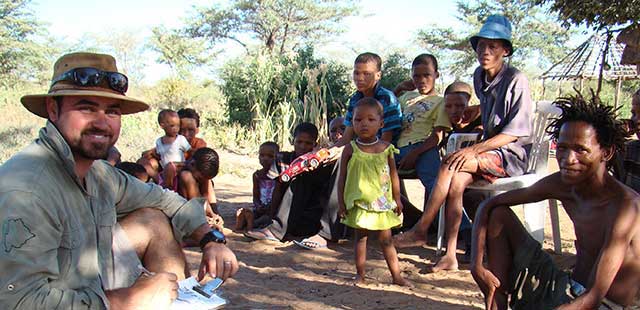
So this is about tourism, but not tourism in the ordinary sense. Operated by local people within the framework of a system provided by Open Africa, these routes will take you to places that you will otherwise not see…
- Authentic places
- Mostly away from the crowds
- Where you can reconnect with nature
- Meet the people in Africa and
- Share their experiences and stories
The network already has 55 routes in six Southern Africa countries, in which there are 1906 participants employing more than 20 000 people.
Why
Because all of us have these few things in common: We worry about and feel guilt about poverty. We care about the environment and extinctions. We know we are part of that problem. We relish travel, to enjoy other cultures and places. We love Africa. And these things are all joined by a silver thread. Communities in Africa’s rural and marginalised areas are the custodians of most of the world’s nature and cultural treasures. They badly need the money we are willing to pay to see these splendours. But because they are marginalised few people know about them. This is why Open Africa is joining these threads, so that you and I can experience the true soul of this magnificent continent whilst bringing succour and nourishment to where it is most needed.
Where
Starting in South Africa and moving northwards, the project is pan-African and intended to cover as much of the continent as is feasibly possible. It is only implemented where communities actually ask for it, to ensure enthusiasm and local commitment to its sustainability.
How
By bringing people together from marginalized and rural communities to collaborate in promoting their tourism potential. The Open Africa system connects tourism products, connects these products to markets, and connects all the players with knowledge, ideas, and opportunities by networking best practice examples throughout the system.
The achievement of the vision is being enabled by the integration of leading edge GIS (Geographic Information Systems) technology with the Internet. The result is this website and the route maps that you can access here.
By whom
Open Africa is a non-profit organisation under the patronage of Nelson Mandela and headed up by founder and Ashoka Fellow, Noel de Villiers. It was established in 1995 with the aim of optimising the synergies between tourism, job creation and conservation, resulting in the concept of Afrikatourism and the development of the Open Africa Project.
“Connecting people and places in making a positive difference in Africa”
Board of Directors

NTHOBI ANGEL is a BA Hons [Sociology] and MSc [Industrial Sociology] graduate also with a Graduate Diploma in Mass Communication. She has been associated with Open Africa for many years and is Chairperson of TsaRona Capital and a director of Batho Bonke Capital, She served as a Non Executive director of ABSA Group and ABSA bank from 2004 to2007. She is active in nature conservation and is currently chair of Kagiso Trust and a board member of Deloitte Chartered Accountants (SA). She has extensive knowledge of the African continent and is a director of the Southern African Research and Documentation Centre (SARDC).
From 1994 to 1995, Nthobi was the public affairs manager at Rhone-Poulenc Rorer SA (Pty) Limited. Thereafter she was appointed general manager: Corporate Affairs at Engen Petroleum Limited, a position she held until early 2000, when she was appointed as executive director: Strategic Affairs at Engen.
From 2001 to 2003 Nthobi was seconded to the Presidency by Engen, as Chief Operations Officer: Strategic Planning and Communications. From 2004 to 2005 she served as CEO of Mvelaphanda Resources. Her last full time employment was with Eskom, as Managing Director External Relations, after which she resigned in 2006 to focus on her role as Chairperson of TsaRona Capital. Nthobi is fluent in seven languages including Kiiswahili.
DELWIN EGGERS (62), married with three daughters, is an enthusiastic intrepid traveller and explorer with a passion for remote places, having driven to many different parts of South and southern Africa including Tanzania, Malawi and Zambia, acting as Mein Host to family and friends. These travels are not restricted to Africa as they include travelling through parts of the Australian Outback along the edge of the Simpson Desert, Oodnadatta , Old Andado and Hermannsburg, west of Alice Springs. Southern Patagonia has also been one of Delwin's destinations. Some of his trips can be described as adventurous expeditions and as such he has a strong appreciation of what Open Africa could do for the rural communities in Africa that he has come into contact with over the years.
Delwin, a CA (SA) with the IMM marketing diploma, is the Group Finance Director of the JSE listed, specialist chemical services company, Omnia Holdings Ltd, having joined the board as an executive director in March 2000. Prior to his involvement at Omnia he has held a number of financial directorships in a range of different industries including manufacturing, FMCG, Mining and the hospitality industry. He has been involved in the tourism industry in his private capacity over the past 25 years.
Besides playing golf, Delwin's hobbies include documenting his travels on expertly produced DVD's which serve as pleasurable memories for his co-travellers. He is also a keen "birder", a lover of the outdoors.

ANDREW MUIR is an internationally-recognised environmental activist based in Port Elizabeth, South Africa. Since 2000, Muir has been the Executive Director of The Wilderness Foundation, a non-profit conservation organisation that aims to protect and sustain African wilderness through holistic and integrated conservation, social and educational programmes, and political lobbying. Previously he was the National Director of the Wilderness Leadership School.
Muir is a Co-Founder and Trustee of Usiko Rites of Passage, Chairman of The Wilderness Leadership School Trust, Board Member of The WILD Foundation (USA), Associate of Gaia Foundation (UK), Director of the Board of Open Africa Initiative and Member and Chairperson of the Eastern Cape Provincial Parks Board. He has a Masters Degree in Environment and Development from the University of Natal, Pietermaritzburg.
Andrew Muir is passionate about the environment and has dedicated his life to conservation and social change. Over the past 21 years, programmes he has initiated have already impacted on 95,000 South Africans, dominated by those from previously disadvantaged backgrounds. Muir was named the 2007 SAB Environmentalist of the Year (RSA) and in 2008 won the international Rolex Laureate for Enterprise.
KOJO PARRIS is chairman of A4e Africa (www.a4e.co.uk) & the African Social Entrepreneurs Network (www.asenetwork.org); the founding CEO of Social Private Equity South Africa (www.socialprivateentrepreneur.com) and a director of a number of social enterprises, including Khulisa (www.khulisaservices.co.za), Operation Hope, Gauteng (www.operationhope.org), Open Africa (www.openafrica.org) and Heart (www.heartglobal.org). He is a former investment banker with NM Rothschilds, Merchant Bank of Central Africa & African Banking Corporation Holdings, oversaw investment portfolios at TA Holdings and Takura Ventures Fund in Zimbabwe, and worked in operational management for Booker Tate in Papua New Guinea, Australia, Kenya and London. He was the Head of the Colloquium for Social Entrepreneurs @ GIBS, chairman of Homeless Talk and mentors young adults privately through formations such as Youth Alliance for Leadership & Development in Africa (YALDA). Kojo, who was born in Guyana for whom he is the Honorary Consul to South Africa, won the Cambridge Commonwealth scholarship where he read for an MA in Engineering (Manufacturing). He subsequently qualified with Deloittes in London where he worked also as a management consultant and completed the CFA (Part 1).

ERNIE HEATH is a Professor and Head of the Department of Tourism Management at the University of Pretoria and also serves on the United Nations World Tourism Organization (UNWTO) Education Council. He has extensive tourism experience, particularly in the spheres of community tourism development, strategic tourism management and destination marketing.
Prior to joining the University, he was Director of the Institute for Planning Research at the University of Port Elizabeth and Deputy Executive Director of South African Tourism. He is co-author of eight books on tourism; has delivered more than sixty papers at international conferences and has published more than one hundred research, consultancy and other reports in this field.
Recognition that he has received for his tourism work include the Skål International Presidential Award for his contribution to the development of tourism in South Africa; a Fellowship from the Tourism Society of Britain; the Chairman’s Award from the Indian Ocean Tourism Organization (IOTO) for compiling IOTO’s first strategic plan; a United Nations World Tourism Organization (UNWTO) Themis Award; and a Laureates Award from the University of Pretoria for Innovation in Teaching. Ernie has been associated with Open Africa from the very start, having been part of the original think tank that conceptualized the initiative.

NOEL N de VILLIERS founded Open Africa. A farmer’s son who started out as a commercial entrepreneur, he founded Avis Rent a Car in Southern Africa. Later entered the corporate world as Managing Director of the Security, Travel, Transport, and Tourism interests of the Rennies Group and thereafter served as Chairman and Managing Director of a similar division in the Freight Services Group. Founded Prime Leasing in partnership with Nedfin, founded SAVRALA (The Southern Africa Vehicle Rental and Leasing Association); and served as deputy chairman of SATOUR. Member of the IUCN's World Commission on Protected Areas (WCPA), and founder member of the Peace Parks Foundation. Elected an Ashoka Fellow in 2006 and a finalist in the 2009 Social Entrepreneur of the Year Award.
Founder’s Message
If you are already in Africa, or intending visiting here, be aware that you have succumbed to a condition for which there is no cure.
This is nothing new. It has puzzled many people for many centuries. Some of them were great explorers (Livingstone), others famous physicians (Albert Schweitzer) and philosophers (Carl Jung). Way back in ancient times it had already been identified and given a name, yet to this day it has defied description. That is to say, nobody has ever been able to be precise about exactly what it is.
The symptoms are extraordinary. Your life will never be the same again. Those of us born here inherit the condition involuntarily. There is no escape, no known remedy. Others who come here, with few exceptions cannot resist the infection.
You have always been aware of nature, but in this condition the environment becomes dominant. The sun, the same sun that has tracked your every footstep in life, takes on a new aura, becomes awesome - as if you'd never noticed it before. The scope of your vision changes. You become preoccupied with distance, far horizons. At the same time you notice small things, subtleties that previously seemed irrelevant - shades of colours become more noticeable than colours themselves. Your hearing intensifies. Mechanical noises offend you as never before, you detect melodies in the trickle of a stream, hear voices in the rustling of leaves by the breeze.
The things you do in life become less important than the things you see, feel, and can touch. You find yourself behaving peculiarly - whispering in the presence of animals, stroking plants. Your spirit becomes detached, as if it wants to linger and be unhurried. Deep emotions are stirred within you. You laugh more easily, yet a sunset can bring tears to your eyes. Your values change. Mountains become friends, valleys pastures for your soul. You feel a constant urge to get out, to walk, to be free.
You meet people and interact with cultures that are totally removed from your own, yet that seem strangely familiar. You become more inclined to listen than to talk. A yearning develops within you, a longing that is at once satisfied yet never saturated. You feel compelled to come back again and again, and each time you do so the experience is somehow deeper than before.
In the African bush, far away from the surroundings you are accustomed to, you feel as though you have come home. Some say this is because your spirit recognizes the birthplace of its origin, others say it is because of the silence, because of the overwhelming presence of a creator. But nobody really knows. There is the grandeur, splendour, vastness, and remoteness that can be explained; the beauty, abundance of birds, animals, plants, flowers. But beyond that there is something that defies description either by adjectives or expletives.
This something is the mystique of Africa and the malady to which you have succumbed is what was called mal d'Afrika by the Latins many centuries ago. These days the French call it mal d'Afrique.
It is said that there is a time and a place for everything. Africa never partook in the industrial revolution, nor the technological era. Largely it was left behind by the developments of the 20th century, the same century that in bringing great wealth to many nations, damaged environmental resources so alarmingly and caused such fatigue to the spirit of humans. Now an interesting situation has developed.
Africa's great nature resources coupled with its shortage of cash on the one hand, is balanced on the other against the wealth and desire of the people in the advanced countries to be reconnected with nature, with themselves and with their roots. Each has what the other needs, and this at a time when the circumstances in which to make a fair exchange could hardly be better. Non-stop flights in wide-bodied jets from almost anywhere at reasonable prices are no longer a novelty.
The only question is how to make the exchange 'fair.' Mal d'Afrika after all is not for sale. One can experience and be captivated by it, but not own it. There would be no point in swapping cash for culture, heritage for hedonism. It would be a tragedy if the specialness of the African environment were to be consumed rather than consecrated, for it is the last of its kind that is left. It could with proper management and care become the saviour of Africa and its people, the resource and characteristic that will mark the place of this continent in the global community.
The key to the answer is balance. Most people know that and many are striving toward its accomplishment. It is this striving that has led to the concept of Afrikatourism, which is what Open Africa is all about. It envisages heralding an environmental epoch in which development is based on the sustainable use of inherent natural and cultural resources. There are many good reasons why this is worth striving for, not the least of which is that the whole world may succumb to mal d'Afrika.